Articles
Roguelike vs roguelite: understanding the differences through history
Roguelike vs roguelite: wondering what each genre means and how they differ? While genre labels can be confusing across store pages and gaming communities, you can easily tell them apart by looking at a few core rules.
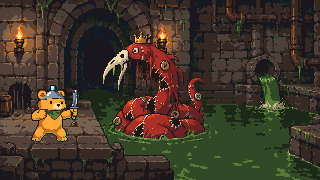
From the genre history starting with Rogue to the criteria of the Berlin Interpretation and the actual gameplay rules of Dungeon Sookuma, which features a free demo on the Steam store, we break it down step by step.

The short answer
The biggest difference is what carries over to the next run when you die. In a traditional roguelike, death leaves nothing behind except the player's own experience, but in a roguelite, stats and unlocks carry over to the next run!
Where does the name roguelike come from?
The term roguelike comes from Rogue, a dungeon exploration game developed in 1980 for Unix-based minicomputers by Glenn Wichman and Michael Toy, who were students at the University of California, Santa Cruz. Ken Arnold later joined the development as well.
The name roguelike, meaning a game like Rogue, began appearing in Usenet newsgroups around 1993. Meanwhile, Beneath Apple Manor, released in 1978, is recognized as the first game to feature core roguelike gameplay elements.
The Berlin Interpretation and the nine criteria of traditional roguelikes
The Berlin Interpretation was formulated in 2008 at the International Roguelike Development Conference and published by Jeff Lait on September 16 of that year. The Berlin Interpretation designated five games as the canon of roguelikes: ADOM, Angband, Crawl, NetHack, and Rogue.
The Berlin Interpretation is a guiding framework rather than a strict set of rules, meaning that missing a few factors does not automatically disqualify a game from being a roguelike. The nine high-value factors identified by the Berlin Interpretation are: procedural environment generation, permadeath without expecting the first character to win, turn-based gameplay allowing careful choice of actions, grid-based movement, non-modal design where all actions are available at any time, complexity, resource management, hack-and-slash combat, and exploration and discovery.
What are roguelike-likes and roguelites?
As more games adopted select elements rather than meeting all criteria of the Berlin Interpretation, terms like roguelite and roguelike-like emerged to distinguish them from traditional roguelikes. Strange Adventures in Infinite Space, released in 2002, is considered a notable early example.
One of the defining features of roguelites is meta-progression. While traditional roguelikes restart completely from the first floor upon death, many roguelites unlock permanent elements usable in future runs as you reach specific milestones. In 'Going Rogue', Valve's official 2022 guide on Steam, roguelites are described as borrowing permadeath rules more loosely, allowing players to carry points, upgrades, or items over into the next run even after dying. Roguelites also frequently adopt real-time action instead of turn-based, tile-based movement, easing the difficulty curve with shorter run sessions tied to clear victory conditions.
Traditional roguelike vs roguelite: key differences at a glance
| Topic | Traditional roguelike | Roguelite |
|---|---|---|
| Upon death | The character is permanently lost, starting fresh from the first floor. | The run ends, but points, upgrades, and items can carry over into future runs. |
| What carries over | No in-game progress carries over; only the player's own experience and knowledge remain. | Elements like points, upgrades, and items can carry over. |
| Flow of time | Turn-based, where time advances only when you act. | Often moves away from turn-based play in favor of real-time action. |
| Movement | Moves on a tile-by-tile and grid-by-grid basis. | Often moves away from tile-based movement. |
| Run length | Some titles feature endless play. | Favors shorter play sessions with defined win conditions. |
| Learning curve and difficulty | Steep learning curve with high difficulty. | Includes various mechanics that ease difficulty. |
Notable titles and the blurring line between genres
Classic examples of traditional roguelikes include the foundational Rogue (1980), alongside NetHack (1987), Angband (1990), ADOM (1994), Dungeon Crawl Stone Soup (2006), Brogue (2009), and Caves of Qud (first released in 2010, Steam 1.0 launched in 2024).
Games blending roguelike mechanics with other genres like action and deckbuilders include Spelunky (2008), The Binding of Isaac (2011), Slay the Spire (2019, roguelike deckbuilder), and Hades (2020, roguelike action RPG). In addition, several games self-identified as roguelites or related labels: Rogue Legacy (2013) described itself on the Steam store as a 'rogue-LITE', Dead Cells (2018) called itself a roguelite action platformer, and FTL: Faster Than Light (2012) described itself as a spaceship simulation roguelike-like. All of these titles are separate games unrelated to Dungeon Sookuma.
Today, the boundary between the two genres is far from cut and dried. As Japanese gaming outlet Game*Spark reported in 2024, the distinction remains fairly blurry. Valve's official guide also noted that many players use roguelike as an umbrella term covering both styles.
Steam tags and international terminology
- Official Steam tags
- The Steam store categorizes games using 'Traditional Roguelike' and 'Roguelite' tags, alongside the overarching 'Roguelike' tag.
- Korean
- In Korea, players refer to them as traditional roguelike, roguelike, and roguelite, and sometimes use roguelike-like to mean a game resembling Rogue. Permanent death is called permadeath.
- Japanese
- They are divided into 伝統的ローグライク (traditional roguelikes), ローグライク (roguelikes), and ローグライト (roguelites). In Japan, roguelikes are also called the 'Mystery Dungeon' (不思議のダンジョン) type.
- Chinese terms and 肉鸽
- According to official Steam standards, they are labeled 传统类 Rogue, 类 Rogue, and 轻度 Rogue. In the Chinese-speaking sphere, there is a pun nickname 肉鸽 (rou ge, meaning 'meat pigeon') derived from the pronunciation of Rogue.
Where does Dungeon Sookuma fit in?
Dungeon Sookuma is tagged as a Traditional Roguelike and Roguelike on the Steam store. It doesn't have the Roguelite tag!
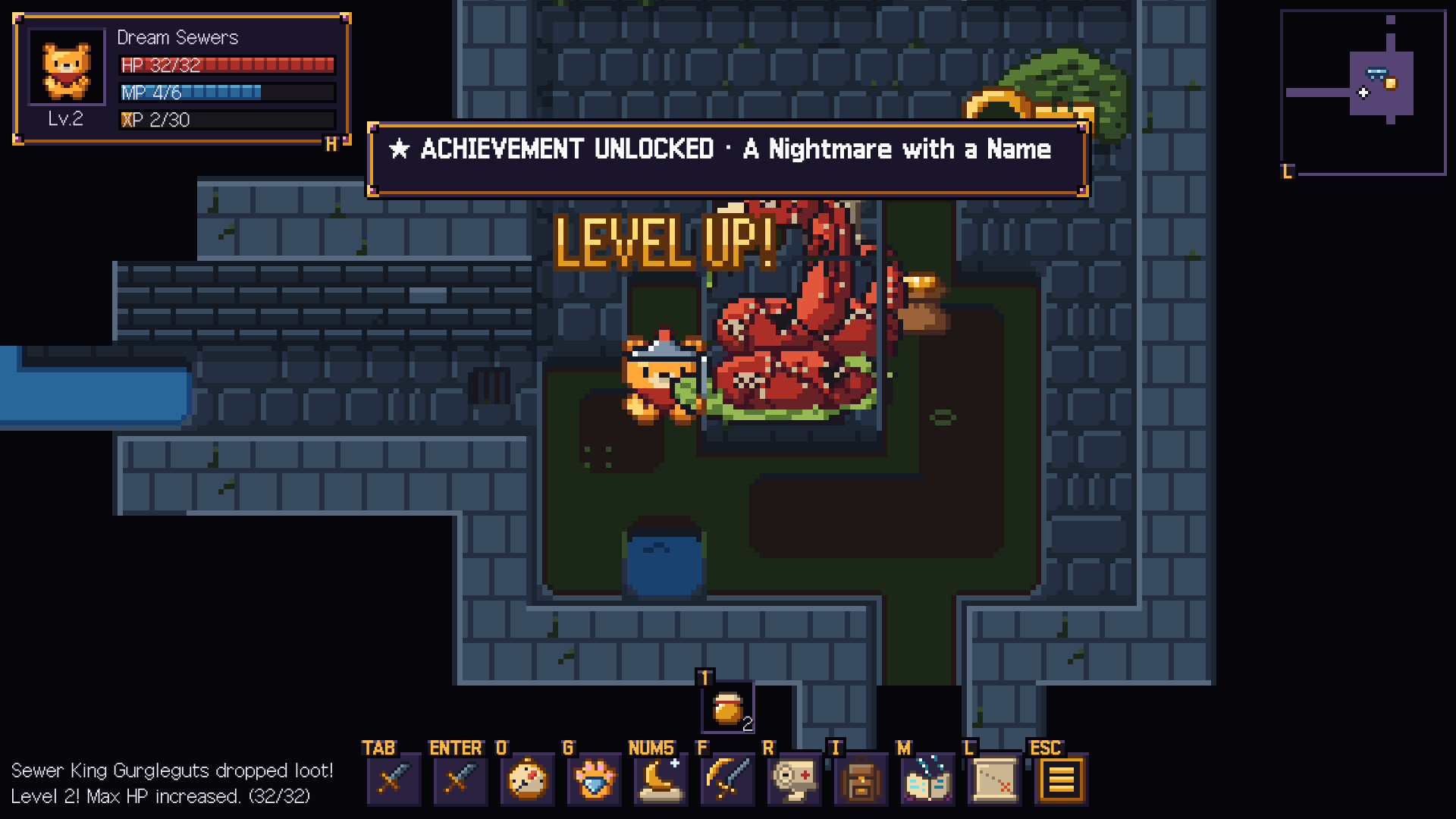
It is turn-based, so enemies only move a step when you take a step, and death ends the run completely without carrying stats into the next one. The Steam store description also notes: 'Death ends this dream. The next one will open again.' The Dream Dungeon is generated anew each run, and potions, scrolls, wands, and relics appear unidentified, hiding their true names until you drink or use them.
Everything outside your line of sight is shrouded in darkness, the sounds of battle echo far and wide, and hidden traps lie everywhere. It plays by traditional rules, supporting keyboard-only controls and giving you all the time you need to think without timed inputs. The goal is to steal the Dream Crystal from the deepest floor and return to the first floor alive!
Frequently Asked Questions
What is a roguelite?
A roguelite is a subgenre that borrows procedural generation and death rules from traditional roguelikes while adding meta-progression, where stats and unlocks carry over after death, making the experience more accessible (lite).
Roguelike vs roguelite: what is the key difference in a nutshell?
The most decisive difference is how permadeath is handled. In traditional roguelikes, death resets the run completely, leaving only the player's own experience behind. In roguelites, in-game points, upgrades, and items carry over, making subsequent runs easier.
What is the Berlin Interpretation?
A set of guidelines formulated at the 2008 International Roguelike Development Conference. It outlines nine high-value factors, including procedural generation, permadeath, turn-based play, and grid movement, and is often used as a benchmark to gauge how closely a game aligns with traditional roguelike design.
What does the term 肉鸽 mean in Chinese gaming communities?
It is a playful pun used in Chinese-speaking communities to refer to roguelikes (类 Rogue). It originated because the pronunciation of Rogue sounds similar to 肉鸽 (rou ge), which literally translates to 'meat pigeon'.
Is Dungeon Sookuma a roguelike or a roguelite?
Dungeon Sookuma is a traditional roguelike. It is tagged as both Traditional Roguelike and Roguelike on the Steam store, featuring no stat progression carryover on death, turn-based combat where every step is a turn, unidentified items, and procedural dungeon generation.
A traditional roguelike where every step takes thought
Dungeon Sookuma offers a free demo on Steam. Experience exploring the Dream Dungeon firsthand, carefully weighing every decision turn by turn.