Articles
Dungeon crawlers: the meaning and features of adventuring through labyrinths for treasure
A dungeon crawler, or dungeon crawl, is a dungeon exploration game where you descend into dark labyrinths to defeat monsters, avoid hidden traps, and find treasure.
Originating in tabletop RPGs and evolving alongside video game history, this guide covers the genre's meaning, history, major branches, and how it differs from roguelikes.

The short answer
It is a game genre centered on exploring labyrinths, fighting monsters, solving traps and puzzles, and finding treasure. While it spans several branches, including first-person party exploration, real-time action, and turn-based roguelikes, the act of dungeon exploration itself remains at its core.
Dungeon crawler meaning: a term from tabletop RPGs
The term dungeon crawl originates from fantasy tabletop role-playing game (TTRPG) scenarios. It refers to a setup where heroes explore a labyrinth (dungeon), battle monsters, avoid traps, solve puzzles, and search for treasure. The Dungeons & Dragons franchise is the prime example, and video games and board games centered on these elements are classified as their own genre.
Merriam-Webster defines a dungeon crawler as 'a video game that usually involves the exploration of a randomly generated maze or dungeon and the defeating of enemies', noting its first recorded use in 1989. Growing your character with treasures found throughout the labyrinth is another core appeal of the genre.
A genre history dating back to 1975

Dungeon crawl video games began in 1975 with pedit5 on the University of Illinois PLATO network. Around 1975, dnd, named after D&D, was released, and around 1980, Rogue arrived, showcasing labyrinth exploration. Wizardry, whose final version was released in 1981, achieved immense popularity and widely popularized the dungeon crawler genre.
In 1987, FTL Games' Dungeon Master became a crucial early example of a first-person party-based dungeon crawler, followed by Eye of the Beholder in 1991. Diablo, shipped in December 1996 and released in 1997, is an action RPG packed with dungeon crawl elements. Thanks to the success of the Etrian Odyssey series released in 2007, the genre experienced a revival, especially in Japan, and in 2012, the real-time dungeon crawler Legend of Grimrock drew widespread attention.
Three main branches of dungeon crawlers
-
First-person party-based (blobbers)
The entire party moves as a single unit (blob), exploring labyrinths from a first-person perspective. It includes turn-based titles like Wizardry and Etrian Odyssey, as well as real-time games such as Dungeon Master and Legend of Grimrock.
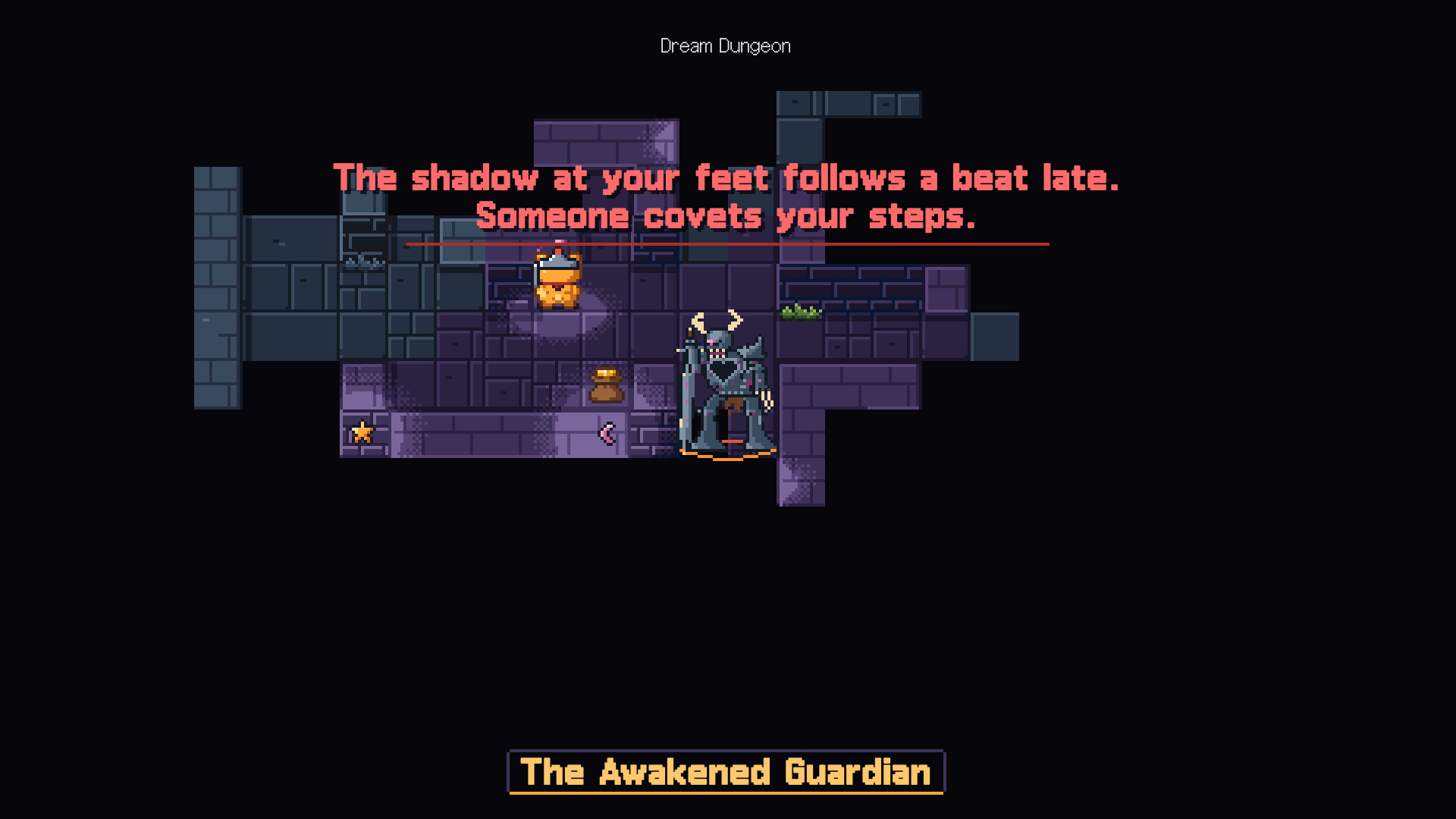
Rather than a first-person party-based game, Dungeon Sookuma features a single character exploring the Dream Dungeon from a top-down perspective.
-
Action dungeon crawlers
These focus on fast-paced real-time combat, exploration, and clearing labyrinths over story. Notable examples include Gauntlet, Diablo, The Binding of Isaac, and Enter the Gungeon.
Instead of testing real-time reflexes, Dungeon Sookuma uses turn-based combat where every step is a turn.
-
Roguelikes
Characterized by procedurally generated labyrinths, grid-based turn-based movement, and permadeath where death ends the run. The subgenre traces its roots back to Rogue, which appeared around 1980.
Dungeon Sookuma is a turn-based game tagged with both Dungeon Crawler and Traditional Roguelike on Steam.
Dungeon crawlers and roguelikes: differences and shared roots
Dungeon crawlers and roguelikes overlap, but they are not entirely the same thing. English Wikipedia defines a roguelike as an RPG subgenre characterized by 'a dungeon crawl through procedurally generated levels, turn-based gameplay, grid-based movement, and permanent death'.
While the classic dungeon crawlers popularized by Wizardry in 1981 featured one or a few fixed dungeons, roguelikes stemming from Rogue focused on labyrinths generated anew each run. The 2008 'Berlin Interpretation' also cited dungeons composed of rooms and corridors alongside the management of finite resources like food and potions as defining traits of roguelikes. In other words, roguelikes are a subgenre that shares the core dungeon exploration of dungeon crawlers.
Where does Dungeon Sookuma fit in?
Dungeon Sookuma is a traditional turn-based top-down roguelike dungeon crawler where baby bear Sookuma explores the Dream Dungeon. Its Steam user tags also include Dungeon Crawler, Traditional Roguelike, Roguelike, Turn-Based Combat, Permadeath, Procedural Generation, Top-Down, Grid-Based Movement, and Pixel Graphics.
Every step takes a turn, and if you fall, that run ends. In the Dream Dungeon, newly generated for every run, potions, scrolls, wands, and relics appear unidentified with their true identities concealed, while limited vision, exploration fog, sound propagation, and hidden traps create constant tension. You can weigh your options without any timed inputs, enjoy full keyboard-only controls, and your ultimate goal is to steal the Dream Crystal from the deepest floor and make it back to the first floor alive.
Regional names
- English (Dungeon Crawler)
- The standard English genre term and the official Steam store tag name.
- Japanese (ダンジョンクロウル / 3DダンジョンRPG)
- The Steam tag uses ダンジョンクロウル. In Japan, first-person grid-based games like Wizardry and Etrian Odyssey are called 3DダンジョンRPG (shortened to DRPG), while top-down roguelikes are often referred to as 'Mystery Dungeon' style games.
- Chinese (迷宫探索 / 地牢探索)
- The Chinese Wikipedia headword and Steam tag are 迷宫探索. Chinese Wikipedia lists 地牢探索, 地城探险, and 地下城探险 as redirect titles, and Chinese gaming media also uses terms like 地牢探索 and 地牢爬行. Roguelikes are also colloquially called 肉鸽 (meat pigeon) due to its phonetic similarity to Rogue.
- Korean (dungeon crawler / dungeon exploration)
- The Korean Wikipedia article title is 'dungeon exploration', and both 'dungeon crawler' and 'dungeon crawl' redirect to it. In Korean gaming media, the classic first-person exploration style is also called 'dungeon RPG' alongside the term 'dungeon crawler'.
Frequently Asked Questions
What is a dungeon crawler?
It refers to games where you enter labyrinths (dungeons), battle monsters, navigate traps and puzzles, and search for treasure. The genre originated from fantasy tabletop RPG scenarios.
Are dungeon crawlers and dungeon exploration games the same thing?
Yes, they mean the same thing. Even on Korean Wikipedia, both 'dungeon crawler' and 'dungeon crawl' link to the 'dungeon exploration' article, referring to games about exploring labyrinths in general.
Dungeon crawler vs roguelike: what is the difference?
Dungeon crawler is an umbrella genre covering all games focused on exploring labyrinths. Roguelikes are a subgenre characterized by procedurally generated dungeons each run, turn-based grid movement, and permanent death (permadeath).
Are dungeon RPGs and dungeon crawlers the same thing?
Broadly speaking, they mean the same thing, but in Korea and Japan, 'dungeon RPG' (especially 3D dungeon RPG) often refers specifically to classic grid-based games with a first-person perspective, such as Wizardry or Etrian Odyssey.
Is Dungeon Crawl Stone Soup (DCSS) also a dungeon crawler?
Dungeon Crawl Stone Soup (DCSS) is a free, open-source traditional roguelike. Since roguelikes feature dungeon crawls through procedurally generated levels, they broadly fall under dungeon crawlers. It is a separate game unrelated to Dungeon Sookuma, and what is the same and what is different is summarized in 'For DCSS Players'. Read: For DCSS Players
What are the most notable dungeon crawler games?
Key titles include early video games pedit5 (1975) and dnd (around 1975), Wizardry (1981), which popularized the genre, Dungeon Master (1987), a landmark early first-person party-based dungeon crawler, Diablo (1997), an action RPG featuring dungeon crawl elements, followed by Etrian Odyssey (2007) and Legend of Grimrock (2012).
What is a blobber?
It is a nickname for first-person dungeon crawlers where the player controls an entire party of multiple characters moving together as a single body, or 'blob'.
Experience the thrill of dungeon exploration for yourself
Dungeon Sookuma offers a free demo on Steam. Plan each step carefully and delve down to the deepest floor of the Dream Dungeon.